The Government has announced a Civil Aviation Bill to modernise British airspace, strengthen passenger protections and give the regulator sharper enforcement powers. At last, the nation’s flight paths are being redesigned so delays can arrive by a more efficient route.
The announcement says UK airspace is approaching 70 years since its original design. That is an impressive lifespan for a system which still treats a cancelled flight as an invitation to discover whether a passenger can sleep upright beside a charging socket.
The Bill would support redesigned flight paths, faster safety rule changes and stronger action against airlines and airports that fail to meet certain obligations. The Civil Aviation Authority would gain powers to fine operators over matters including disruption support, compensation and accessible services. The airport lounge has heard the word consequences and is checking whether they require prior authorisation.
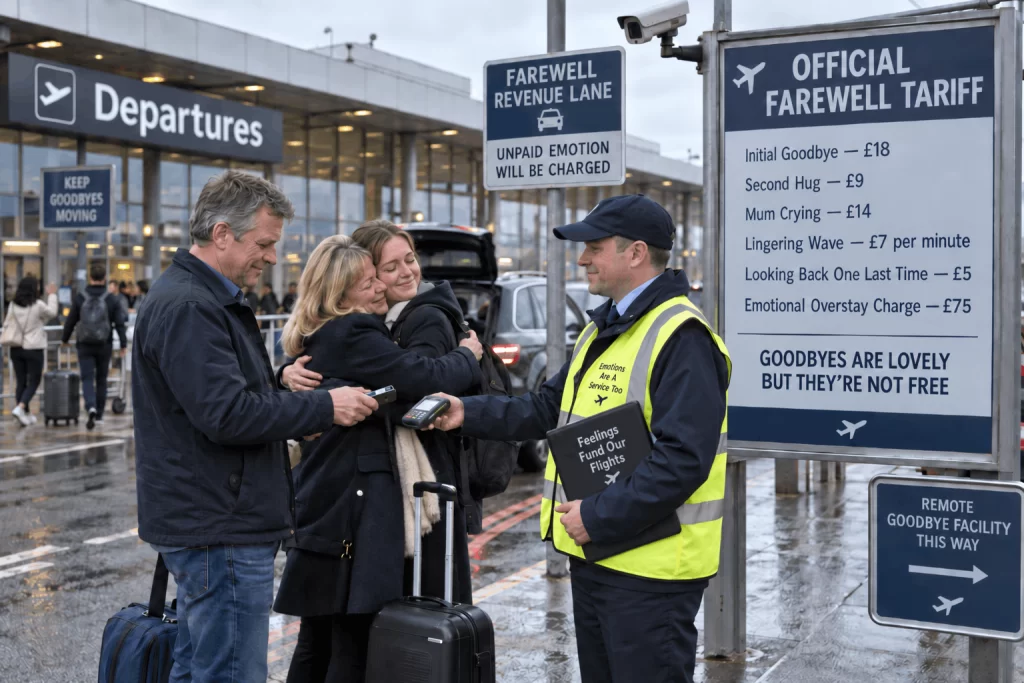
Passengers could receive clearer information, better assistance and more reliable routes. They may even learn what is happening before the departure board changes its mind, although that remains a technological frontier apparently outside the Bill’s immediate flight plan.
The Government says that without reform, delays could rise by 200% by 2040. This gives the programme a useful sense of urgency. It also suggests that the country has spent decades allowing the future to queue behind the past, while congratulating itself on the orderly nature of the queue.
There is a particular elegance to the proposed solution. The airspace is old, passenger rights need enforcing and the routes require redesigning. The response is another Bill, another framework and another promise that the system will soon become easier to understand. Somewhere, a form is being prepared to approve the form that will explain this.
The serious point is that better routes and enforceable rights could make a real difference, especially for disabled travellers and people stranded by disruption. The satire lies in the distance between that straightforward ambition and the machinery required to deliver it. A system can be perfectly capable of describing the problem in fluent policy language while still leaving the passenger beside the gate, holding a sandwich voucher and wondering whether it counts as transport.
By the time the new system is fully modernised, the first aircraft may already have reached its destination. The passengers, naturally, will still be waiting for the paperwork confirming that they were allowed to leave the airport.
Source: GOV.UK.